Profiling Self-Directed Learning with Generative AI
Dissertation · In Progress
A cross-sectional latent profile analysis with exploratory longitudinal validation examining how global language learners differ in their AI-mediated self-directed learning and how those patterns evolve over time.
Foundation
Dissertation
Theoretical Foundation — AI-SDL Framework
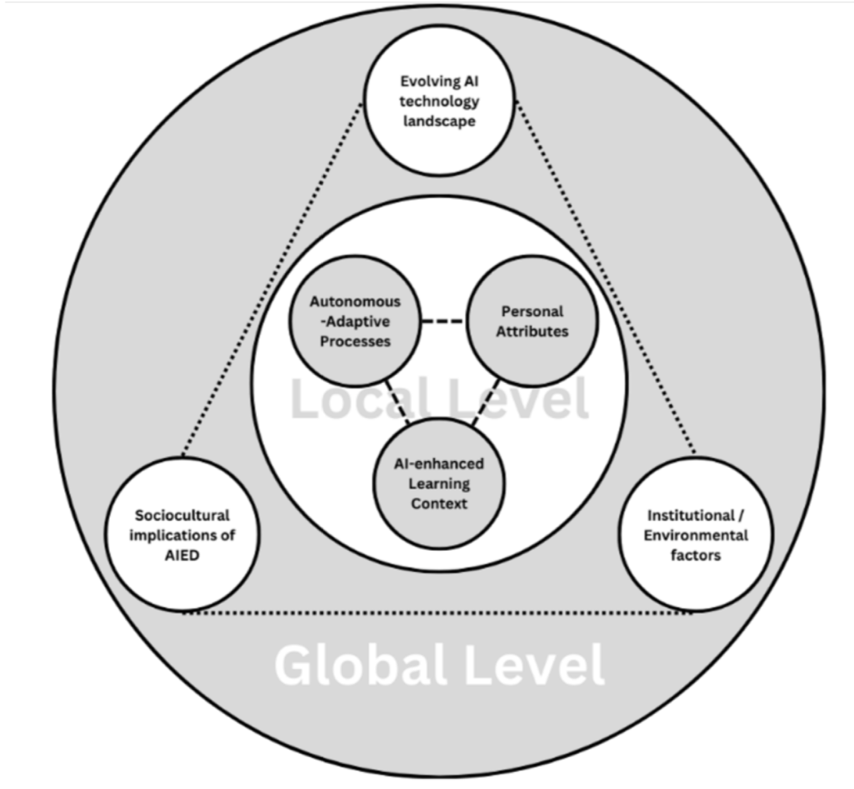
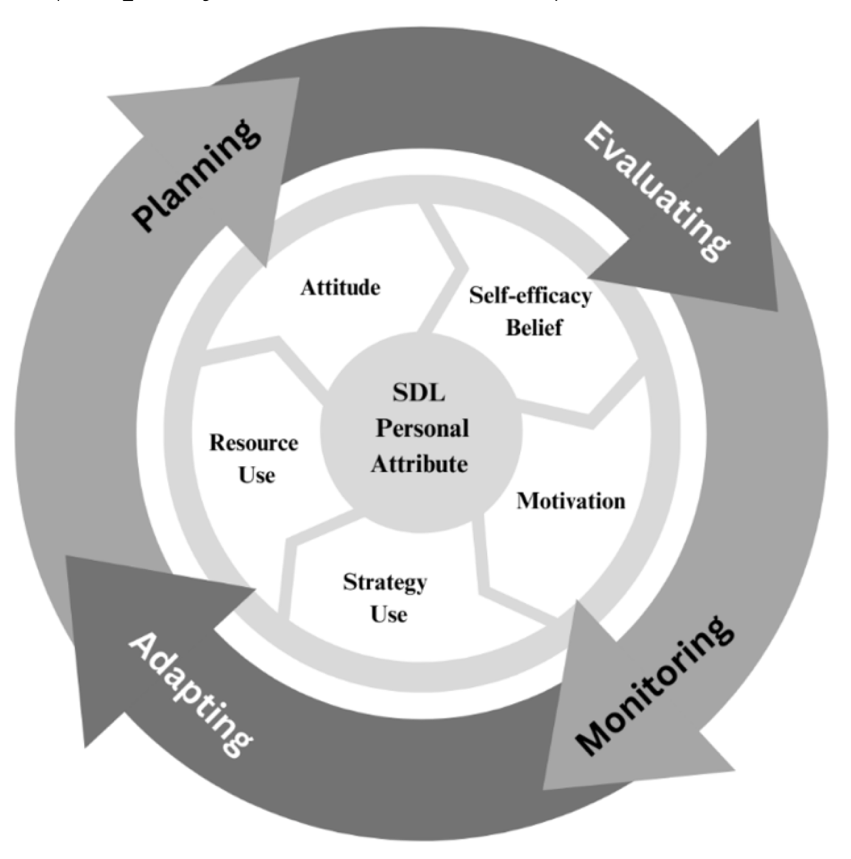
Built on Song and Hill's (2007) SDL model, the AI-Integrated Self-Directed Learning Framework (Li et al., 2024) recast learner attributes as five AI-contextualized dimensions — self-efficacy, attitude, motivation, strategy use, and resource use — and recast the learning process as autonomous-adaptive rather than linear. The framework operates across local and global levels, situating learner–AI interaction within sociocultural, institutional, and design contexts.
Core Study 1 — Learner Profiling & Longitudinal Tracking
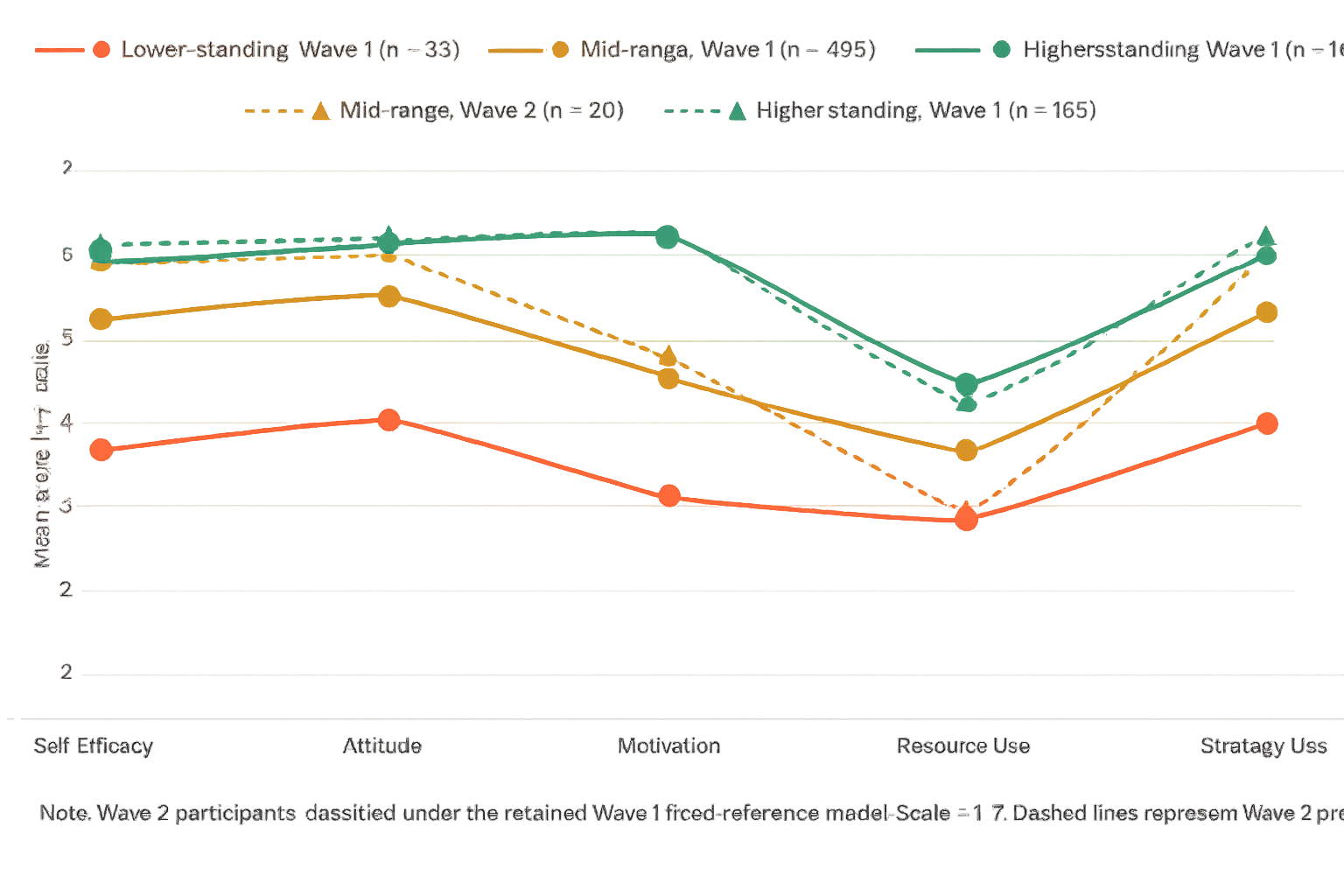
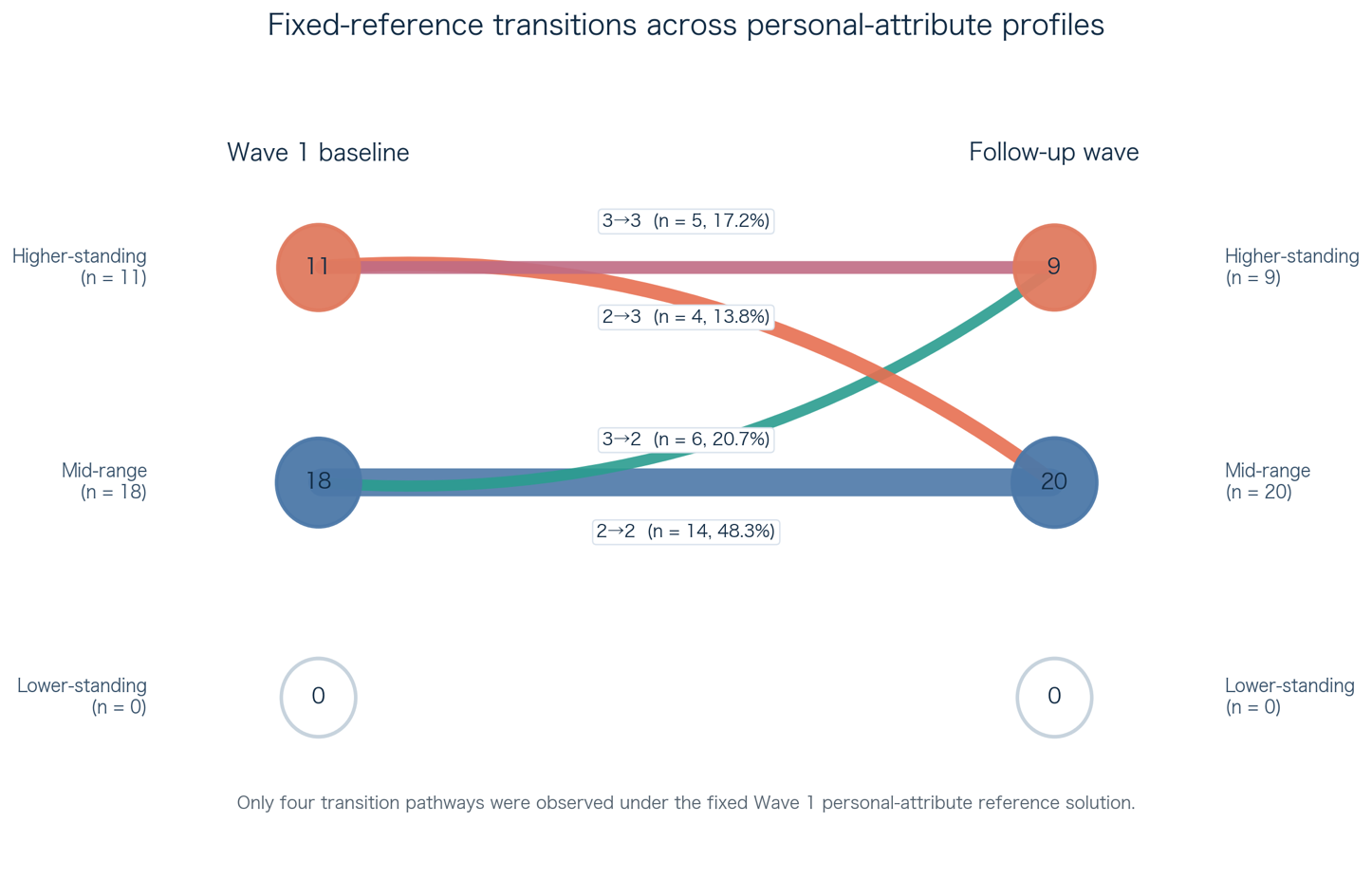
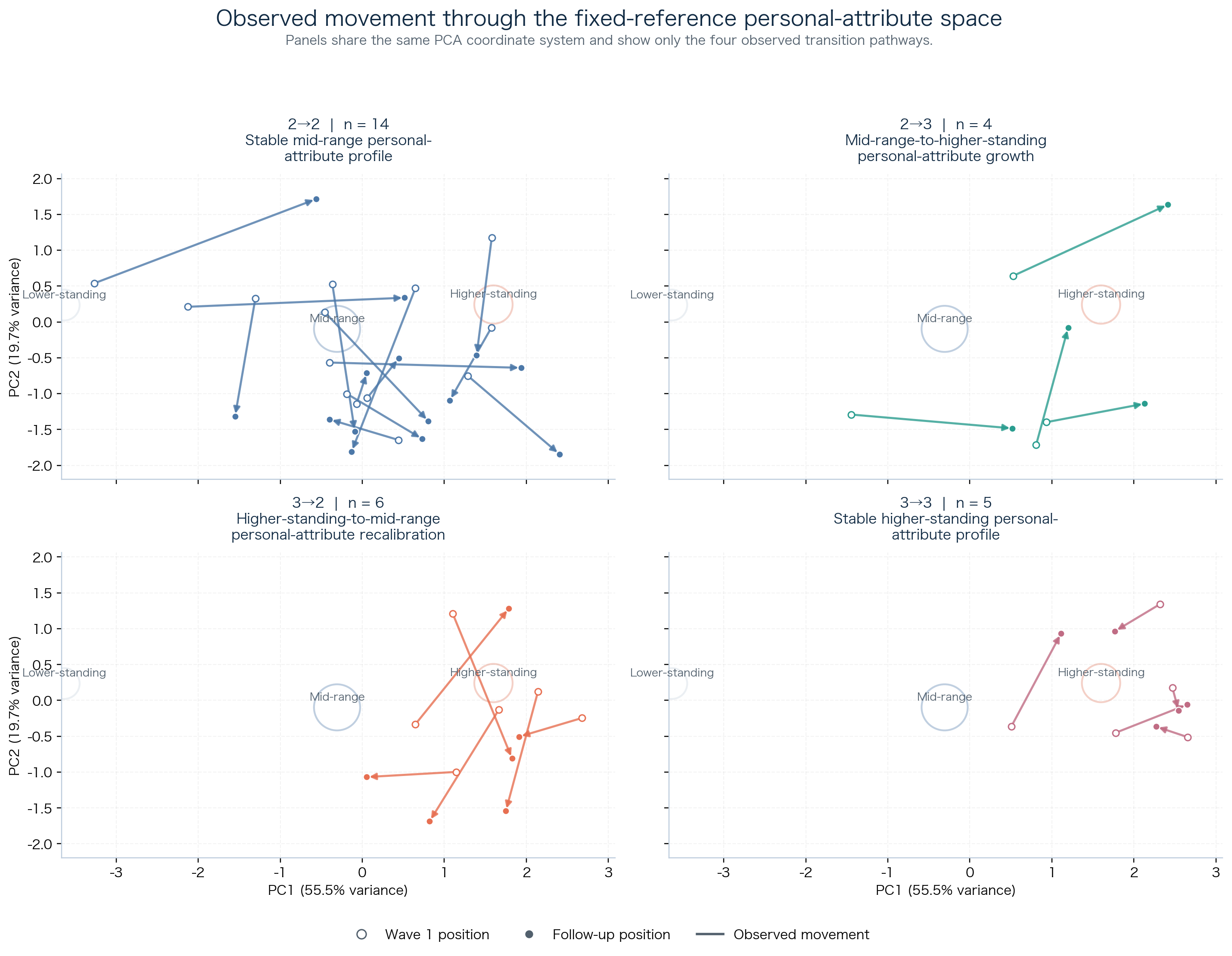
Core Study 1 Finding
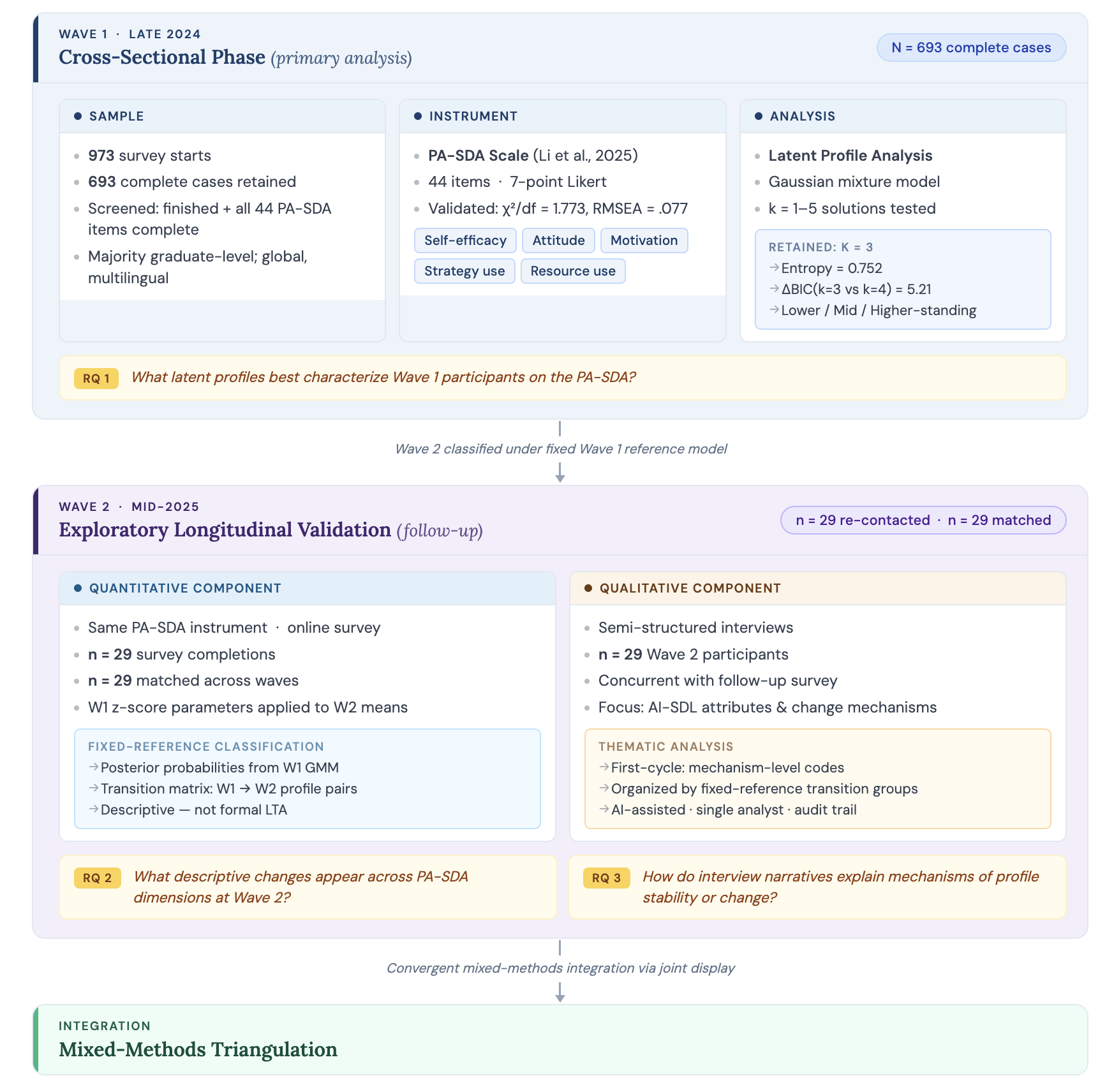
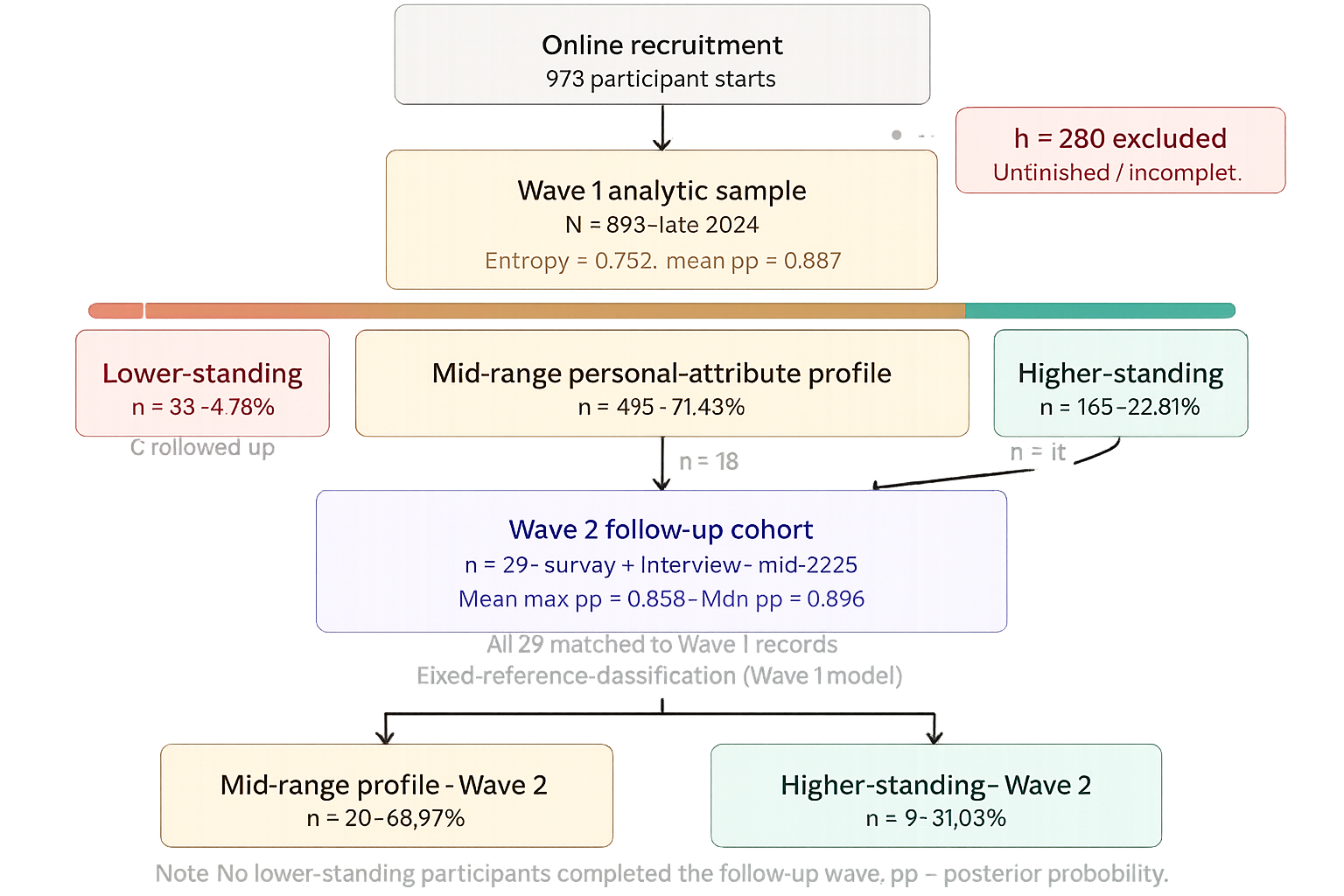
AI-mediated self-directed learning is heterogeneous at baseline and largely stable over time. Apparent decline often reflects strategic recalibration — not regression. The GenAI learner landscape is dominated by a mid-range majority capable yet not yet fully strategically integrated.
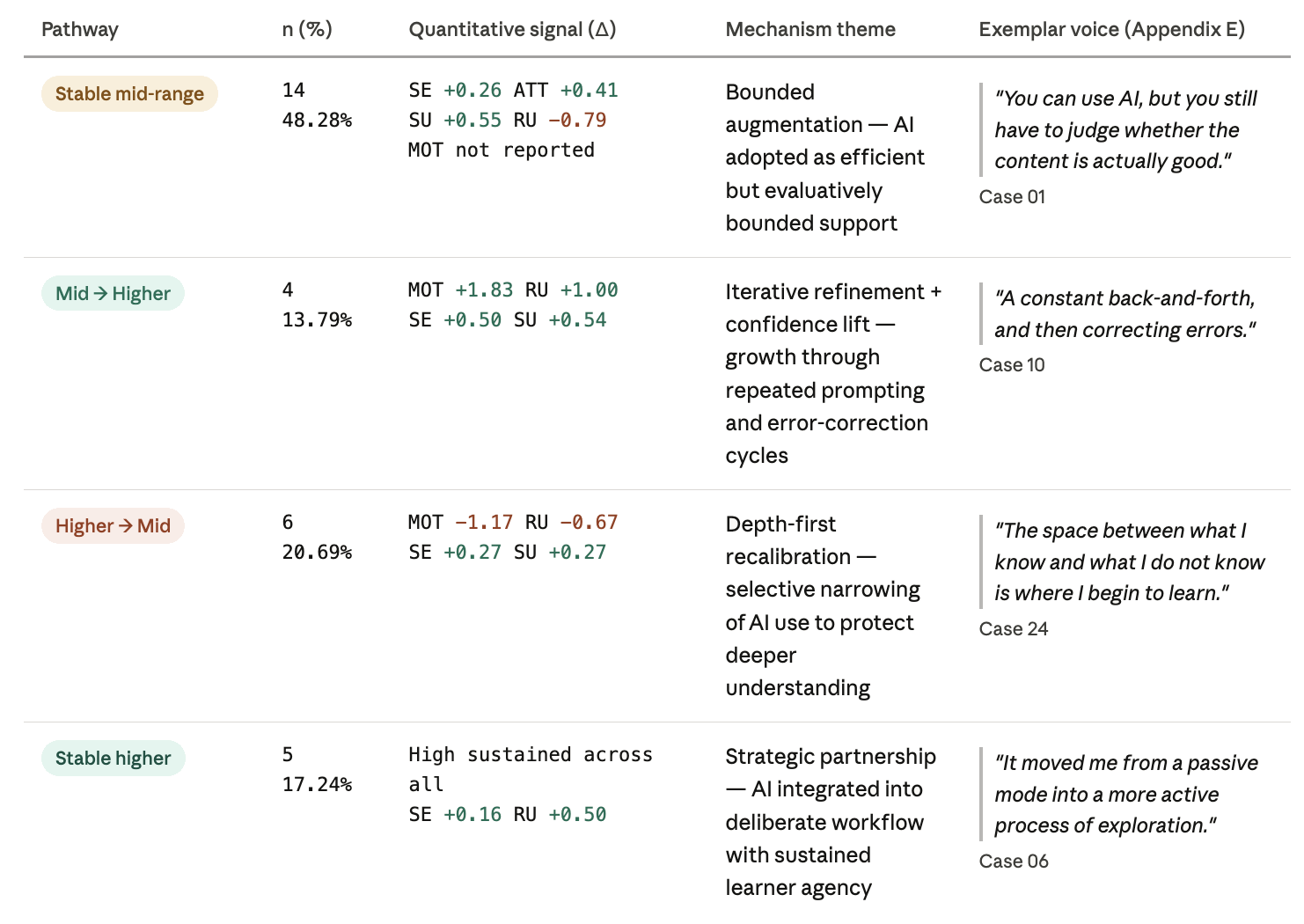
Core Study 2 — Learning in the Loop
A phenomenologically informed qualitative study with the same Wave 2 cohort (n = 29). Semi-structured interviews captured learning moments, meaning-making, and boundary-setting as they occurred in lived AI-mediated self-directed learning practice.
AI entered the execution of self-directed learning through an iterative loop of prompting, evaluating, verifying, and adapting. Agency showed up through verification routines, attempt-first rules, and selective trust — not through frequency of use.
Conceptual moments (AI surfaced new frameworks), expressive moments (AI offered linguistic alternatives), reflective moments (AI prompted metacognitive awareness), and generative moments (AI co-produced new ideas). Moment types mapped onto learners' existing strategic profiles.
Policy ambiguity, cost, ethical concerns, and authentic voice shaped what learners were willing to do with AI — functioning as a global-level layer that bounded local learner–AI interaction regardless of individual attributes.
Core Study 2 Finding
AI in self-directed learning behaved less like a passive tool and more like a co-regulatory partner — entering the execution of learning rather than merely surrounding it. What mattered most was not how often learners used AI, but whether they retained interpretive authority over its outputs.
Related Evidence Base
This dissertation builds on a connected line of published work spanning early empirical studies, framework development, and scale validation.