AI in Learning, Humans in Charge
Doctoral dissertation · Purdue University · Defended June 2, 2026
AI in Learning, Humans in Charge
Mapping, Measuring, and Modeling Self-Directed Language Learning with Generative AI
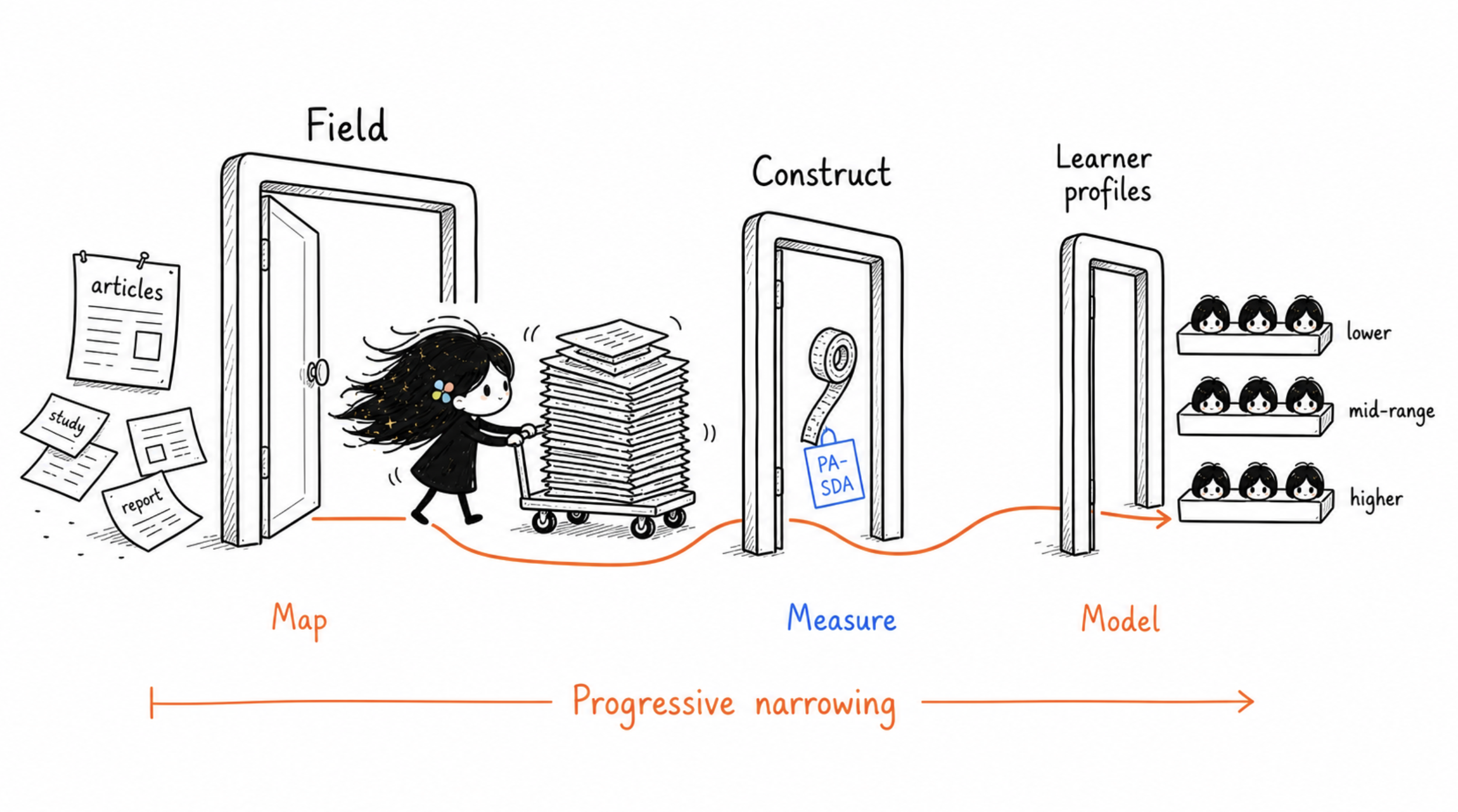
The project asks how learners can use GenAI without giving up agency, authentic work, or learning quality. The answer is not simply "more AI use"; it is whether learners can regulate goals, verify outputs, and stay in charge of interpretation.
First, define what learner agency means in AI-mediated SDL.
The dissertation builds from the AI-integrated self-directed learning framework and the PA-SDA personal-attribute structure. These figures set up the local learner-AI relationship before the empirical profile analysis begins.
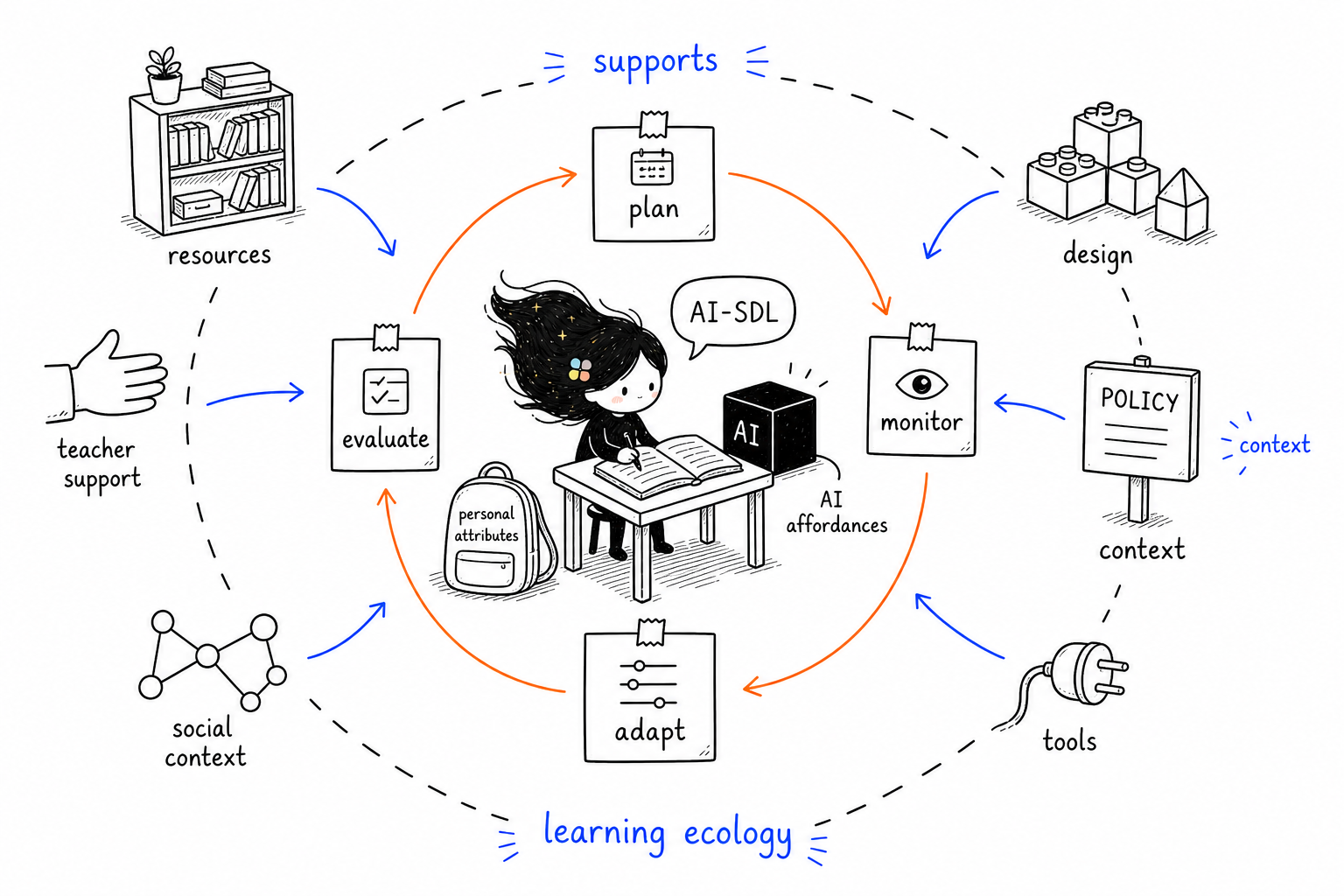
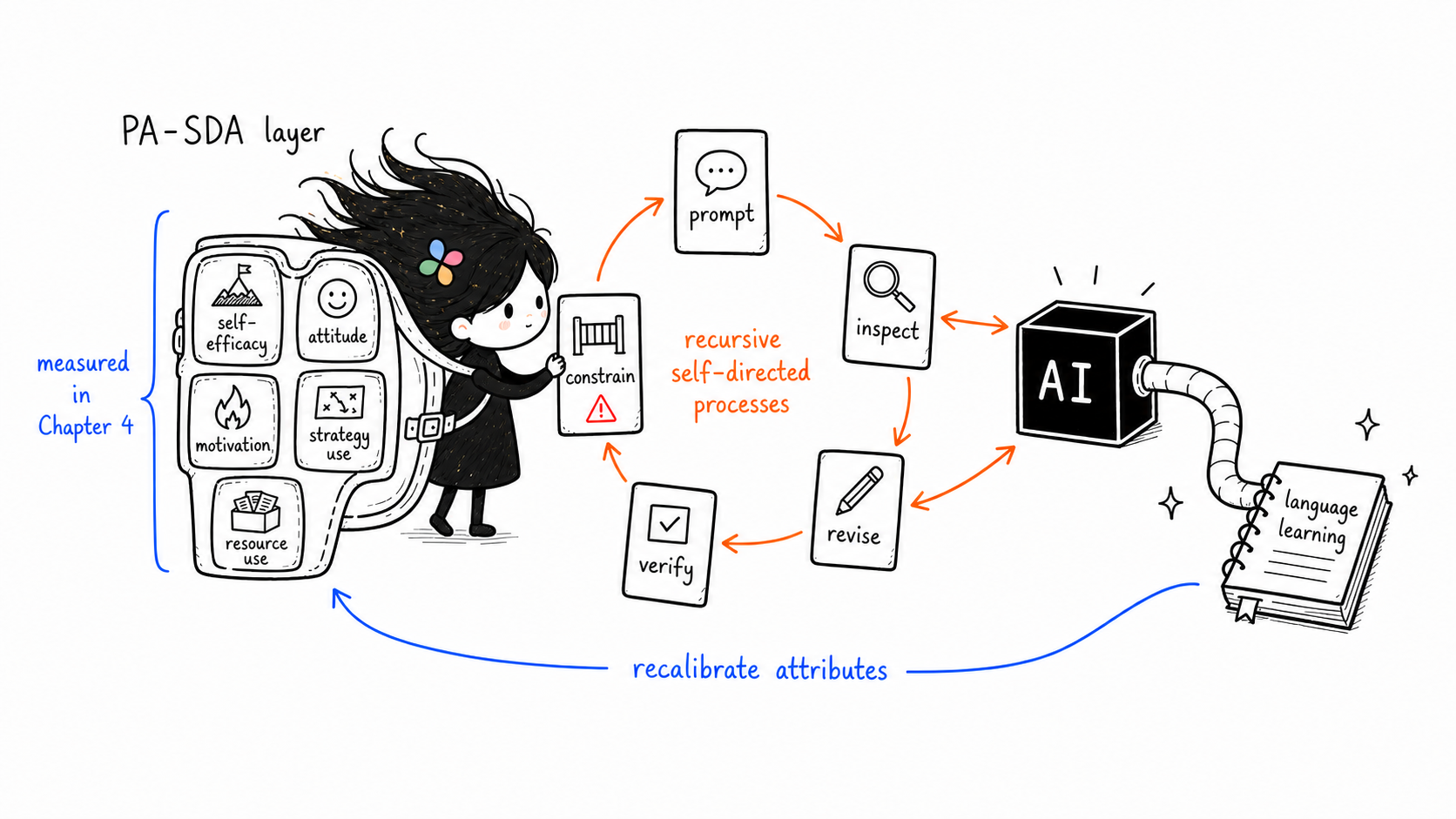
The dissertation moves from landscape to scale to profiles.
Rather than treating GenAI learning as one broad behavior, the project gradually narrows the unit of analysis: the field, the measurement model, and finally learner heterogeneity.
Map the field
What did early ChatGPT and language-education research make visible, and what did it miss?
Build PA-SDA
How can AI-mediated self-directed learning attributes be measured with a validated scale?
Model learners
How do learner attributes cluster, and what happens when learners are followed over time?
Study 3 is the core story.
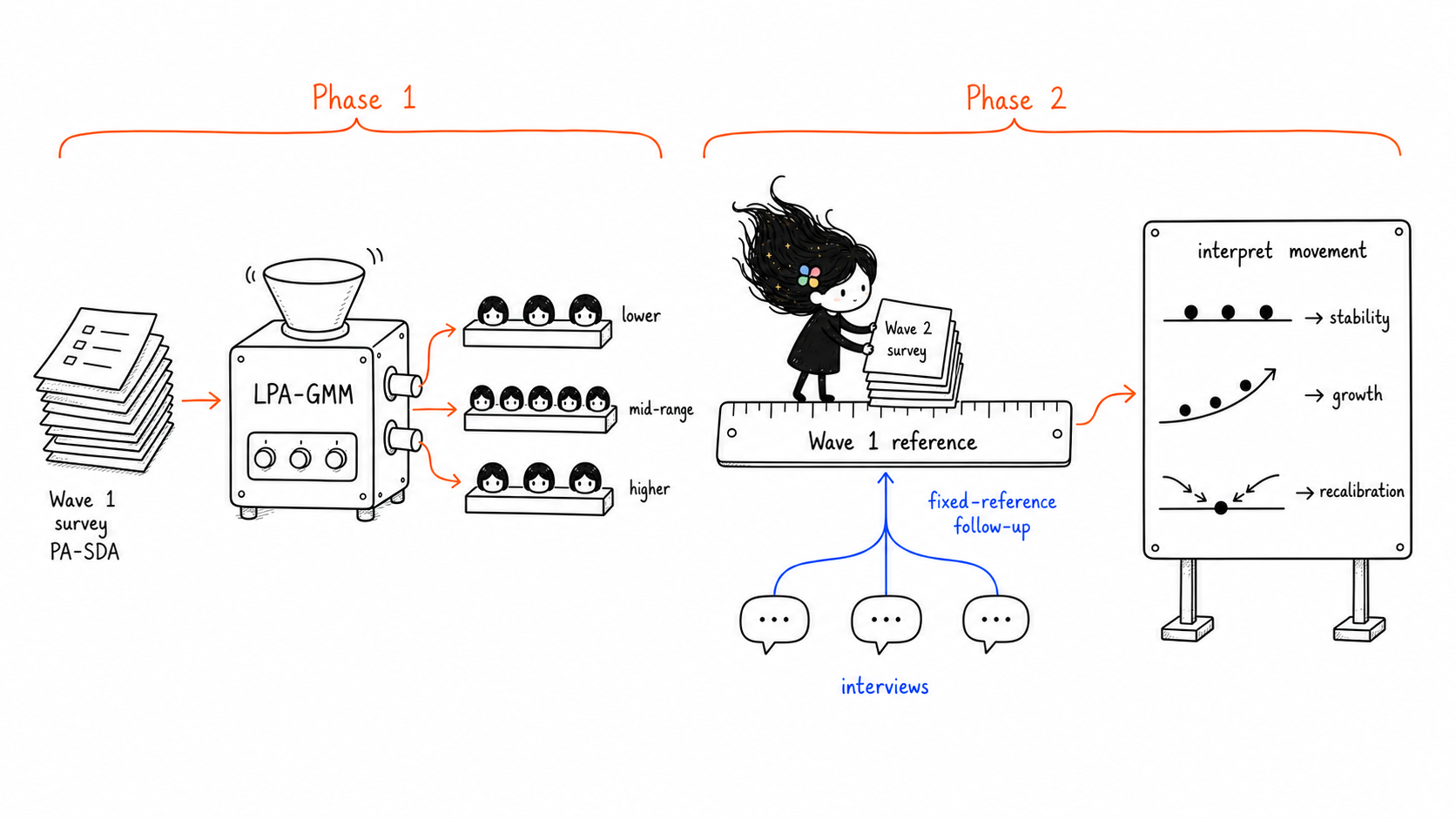
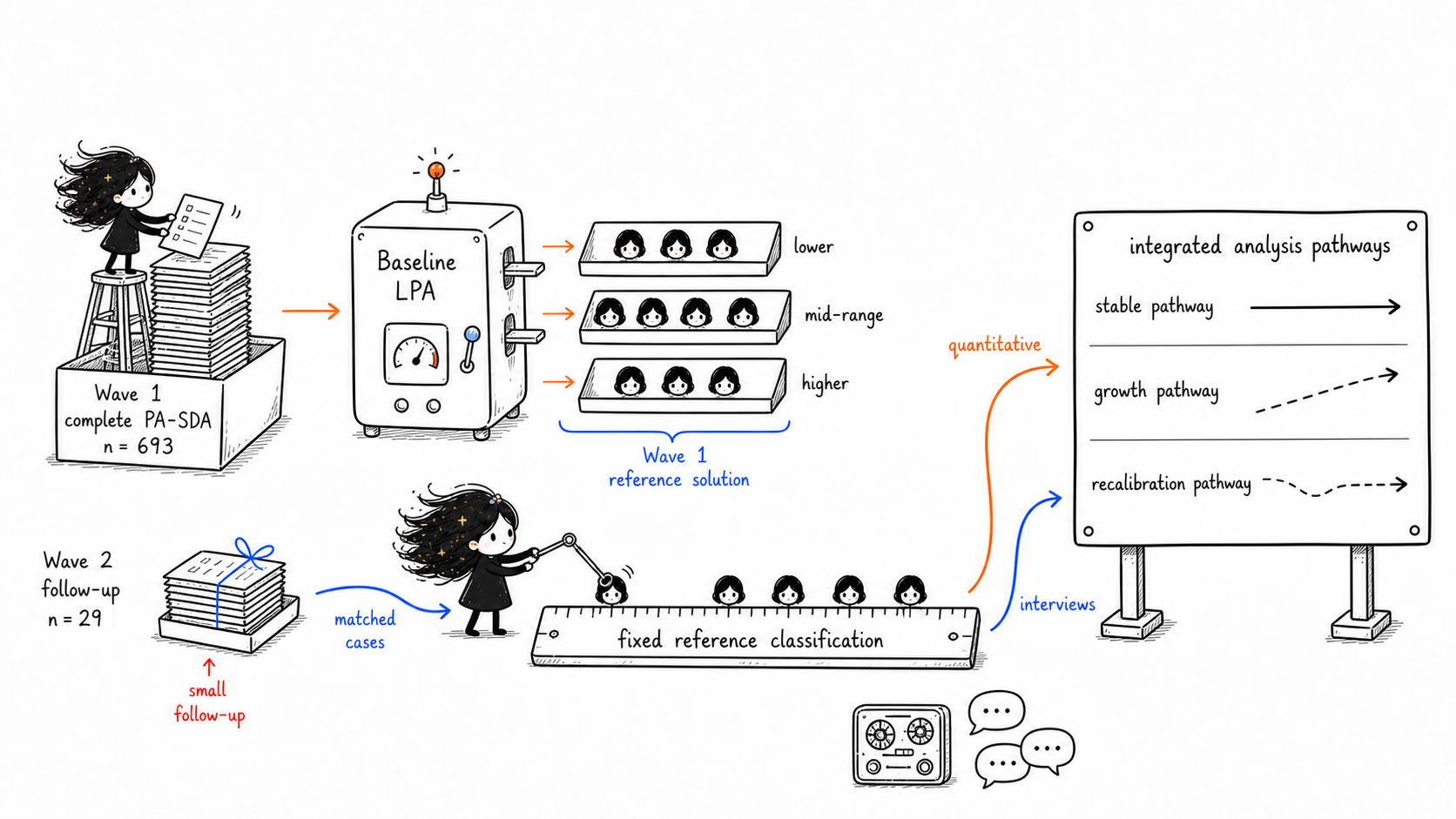
The final study uses PA-SDA to model learner heterogeneity. It starts with 693 Wave 1 learners, identifies three personal-attribute profiles, then follows 29 matched participants with a fixed-reference Wave 2 analysis and interview interpretation.
Step 1
Start with the analytic sample.
The sample flow matters because the longitudinal layer is intentionally cautious: large baseline profile modeling, small matched follow-up, and qualitative interpretation rather than causal transition claims.
Step 2
Find the learner profiles.
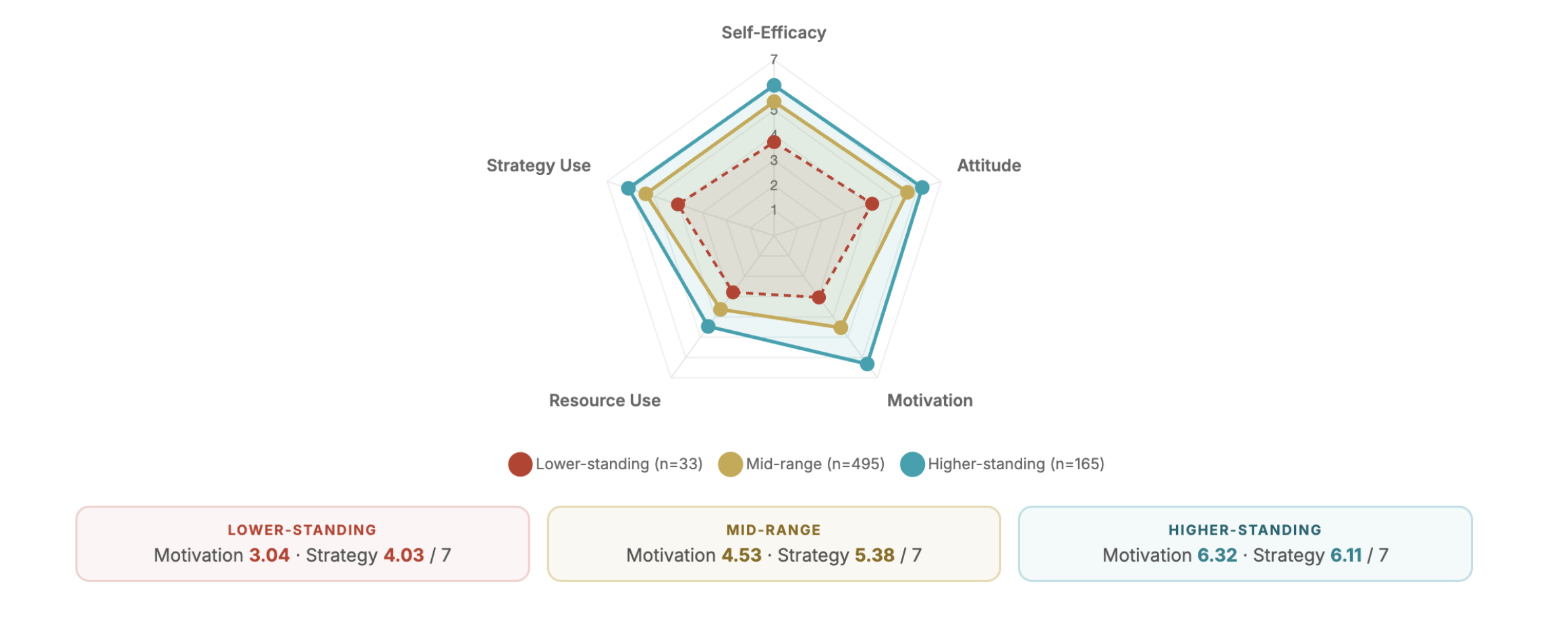
The main baseline finding is heterogeneity. Learners do not simply use AI more or less; their confidence, attitude, motivation, resource use, and strategy use cluster into distinct profiles.
Step 3
Hold the reference model still.
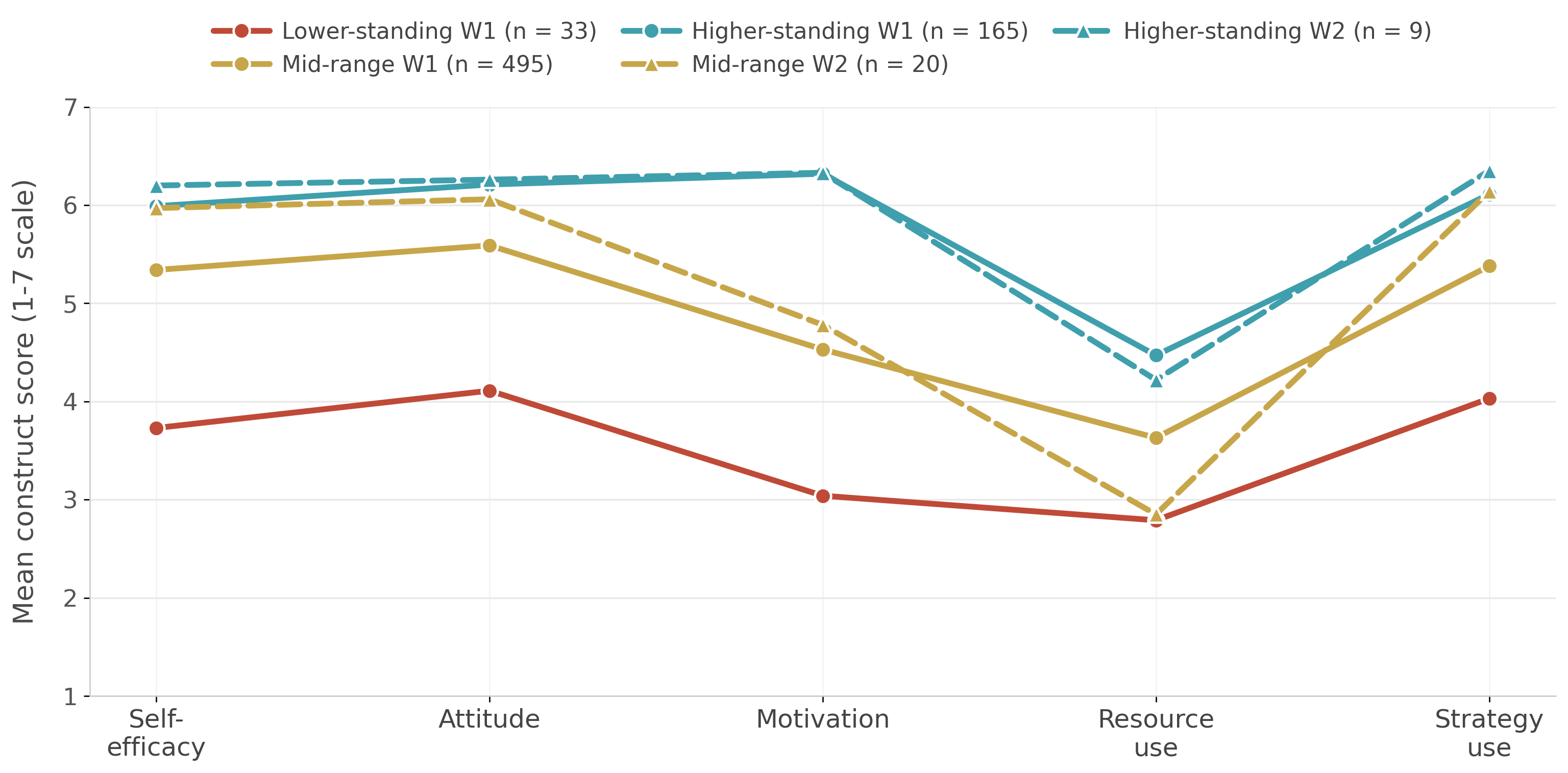
Wave 2 participants are classified against the retained Wave 1 reference model. That makes the follow-up descriptive and interpretable: it shows where learners land relative to the original profile structure.
Step 4
Read movement as stability, growth, or recalibration.
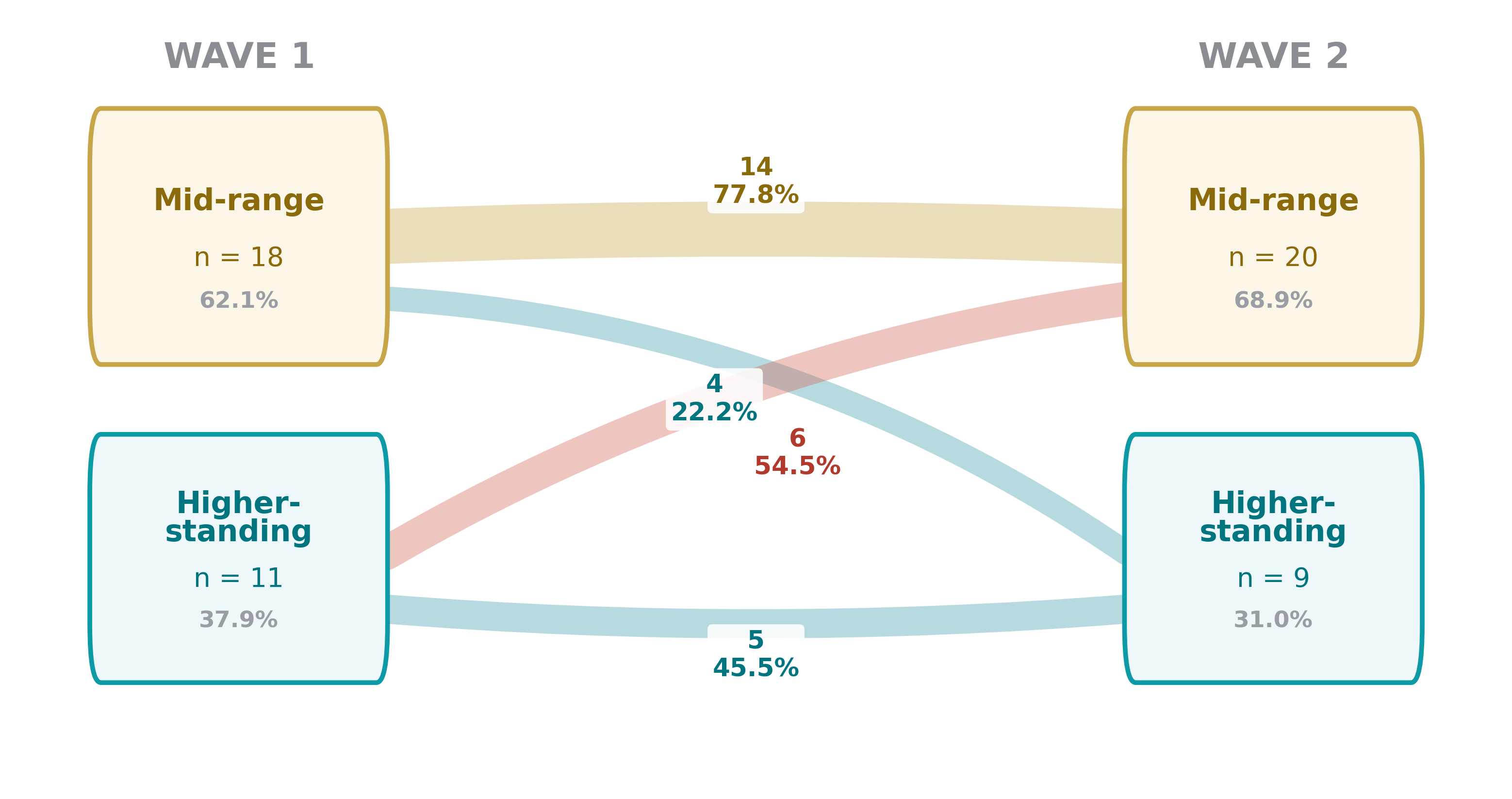
Most mid-range cases stayed mid-range, some moved upward, and no matched follow-up case originated from the lower-standing profile. The movement figure is therefore a descriptive map, not a causal transition model.
The Study 3 contribution is the person-centered view: GenAI-supported learning is not one uniform experience. Learners differ in readiness, strategy, and capacity to maintain agency while working with AI.
The dissertation connects framework, scale, and empirical modeling.
This project builds on a connected line of published work on self-directed learning, GenAI-supported language learning, and PA-SDA measurement.